Commercial Spray Foam Insulation · Sterling Heights

Commercial Spray Foam Insulation in Sterling Heights, MI

We insulate warehouses, metal buildings, and pole barns across Sterling Heights with spray foam that stops condensation and holds the temperature year round.

1-3 days installs · typical timeline
Free Quote

Free Commercial Spray Foam Insulation quote.

We reply within 1 business hour. No spam, ever.

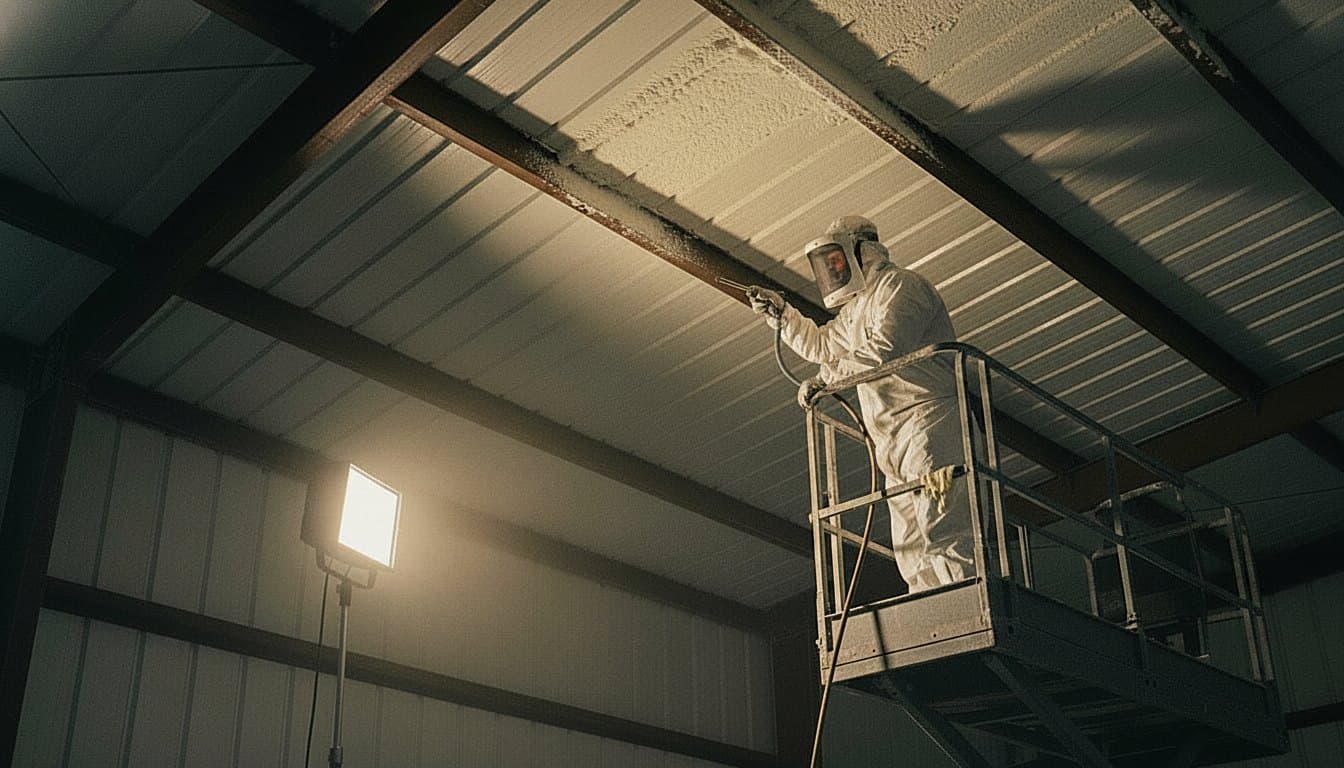
Large commercial space insulated with spray foam
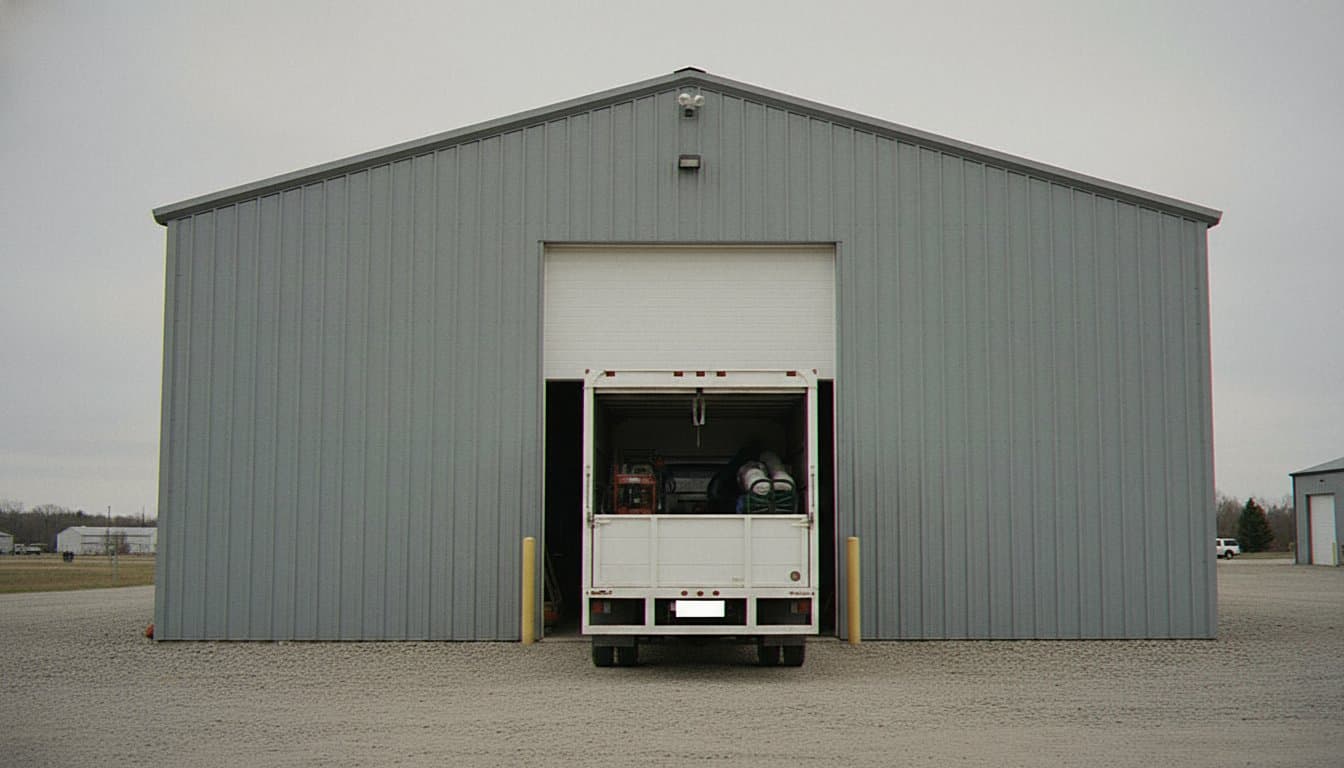
Commercial building exterior before insulation
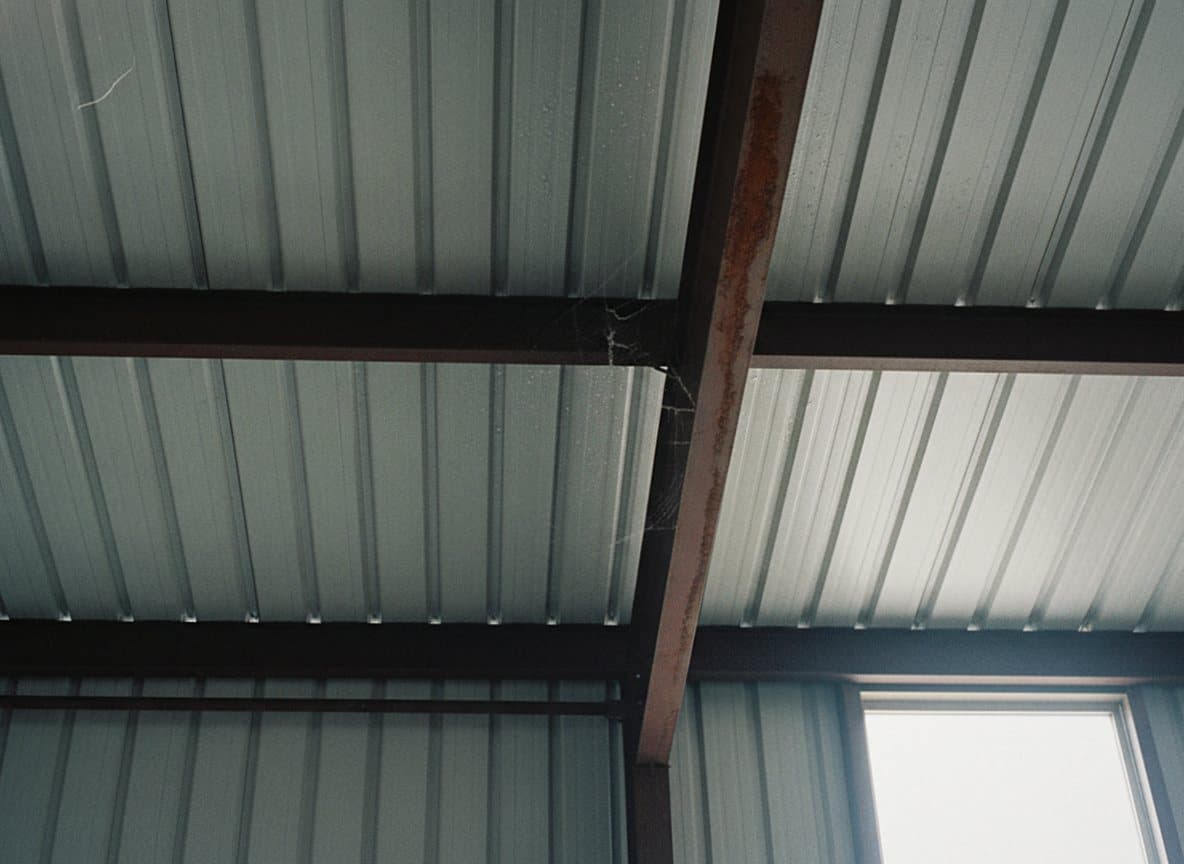
Uninsulated commercial interior
What we install

Seal the Metal Shell and Stop Condensation for Good

Commercial spray foam insulation in Sterling Heights solves two problems at once: heat loss and condensation. Metal buildings leak both. Roofs and wall panels are thermal bridges. Cold moves straight through in a Macomb County winter. Warm air inside the building hits those cold surfaces and water forms on the metal. That dripping moisture ruins stored product, corrodes metal fasteners, and leaves puddles on the floor. Spray foam bonds directly to the metal and keeps the surface temperature above the dew point so condensation never forms. For buildings that also need their concrete foundation walls and rim joists sealed at the same time, our closed-cell spray foam service handles all of those surfaces too.

We use closed-cell foam on the great majority of commercial jobs we take in Sterling Heights and Macomb County. The dense cell structure delivers around 6.8 R-value per inch. At the right thickness, the cured foam also acts as a vapor retarder. When we spray it onto a metal roof deck, the foam bonds to the steel and raises the deck surface above the dew point. Condensation stops. On commercial walls, we spray onto the framing or inside the panel, depending on how the building is built. Lift thickness control matters more on large jobs. More material means more heat from the reaction. We build in planned lifts and let each one cure before the next goes down.

  • Spray foam on metal roofs and walls stops moisture from forming on cold surfaces inside.
  • Closed-cell foam runs around 6.8 R-value per inch on warehouse walls and roofs.
  • Sealed walls and roofs hold heat in and cut the energy needed to warm the building.
  • Foam bonds to steel and framing and closes the air paths that bleed heat out.
  • One pass seals air movement and blocks vapor without needing a separate barrier layer.
Commercial spray foam stops the condensation that ruins stored product and corrodes a metal building from the inside out.

We take commercial spray foam jobs across Sterling Heights and all of Macomb County. Calls come from warehouse owners, shop operators, and building managers. Most have fought condensation or high heating bills for years with no lasting fix. We walk the building before we quote anything. We check the metal surface condition, any existing R-value, and where the main air bypasses are. For most Macomb County commercial buildings, the roof deck with no foam is the main source of heat loss and moisture. We check substrate temperature before any foam goes down. Cold metal causes adhesion failure. We will not spray outside the range the material needs. We reschedule rather than put down foam that will not hold.

If your warehouse or metal building runs cold in winter or sweats in summer, call us. We serve Sterling Heights and Macomb County. Free estimates on every job.
Materials

What Goes Into a Commercial Spray Foam Job

Commercial spray foam uses the same two part polyurethane chemistry as residential foam, applied at a larger scale. The two liquid components mix at the spray gun and react into a hard, dense structure. That structure traps air inside each closed cell. The closed cells hold the R-value, around 6.8 per inch, and make the cured foam act as a vapor retarder. Both functions matter on a metal building. The roof deck and wall panels are direct thermal bridges in winter. Spray foam applied to those surfaces blocks the thermal path and keeps the metal above the dew point so condensation does not form on the inside surface.

Equipment condition is a real factor on commercial jobs. Both foam components need to be at the right temperature and pressure when they mix at the gun. Even a small deviation changes the cell structure and the finished R-value. We check equipment calibration before every job. Substrate temperature is a separate check. Metal buildings can drop below the range the foam needs on a Michigan job site from late fall through early spring. Cold metal causes adhesion failure. The foam looks applied but does not bond and the condensation problem returns. We will not spray outside the required range and we reschedule when the substrate is not ready.

  • Around 6.8 R-value per inch in the cured closed-cell state
  • Closed-cell structure acts as vapor retarder at adequate thickness
  • Equipment calibration and substrate temperature checked on every commercial job
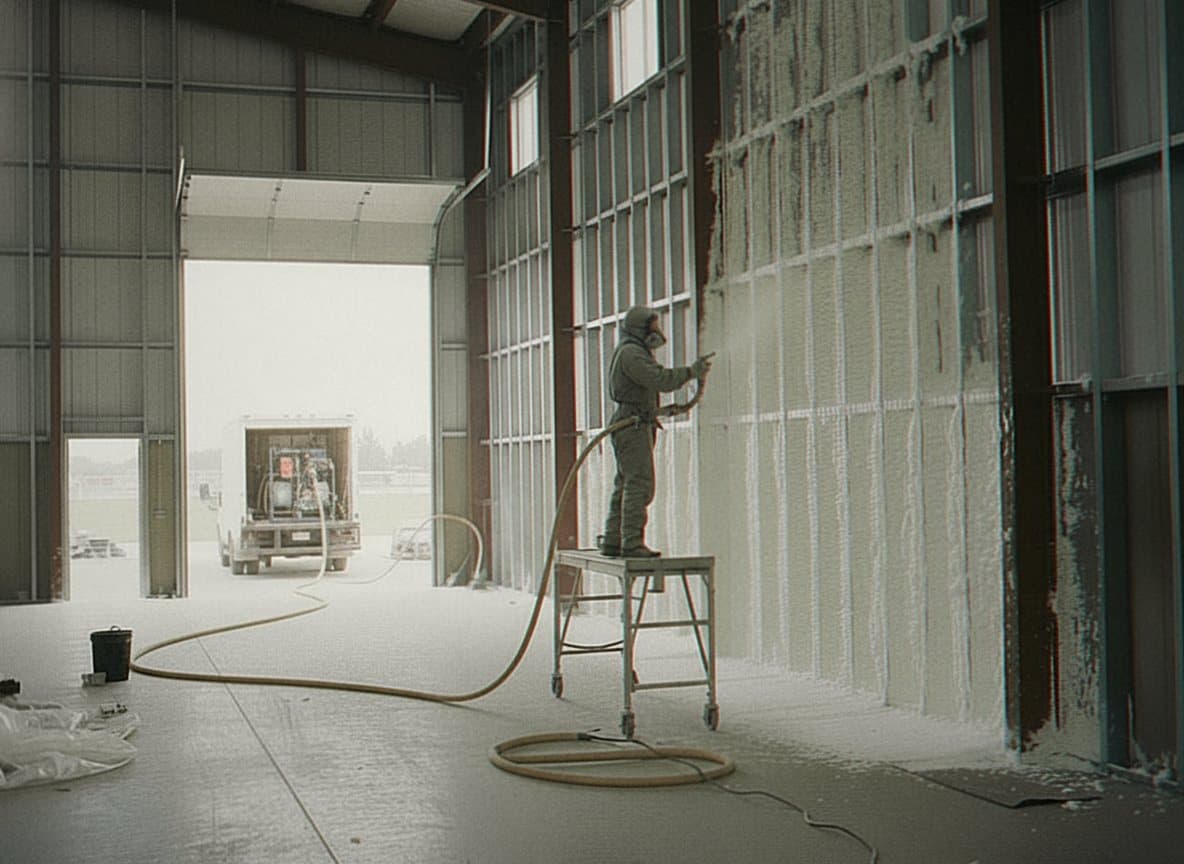
Foam application to metal building
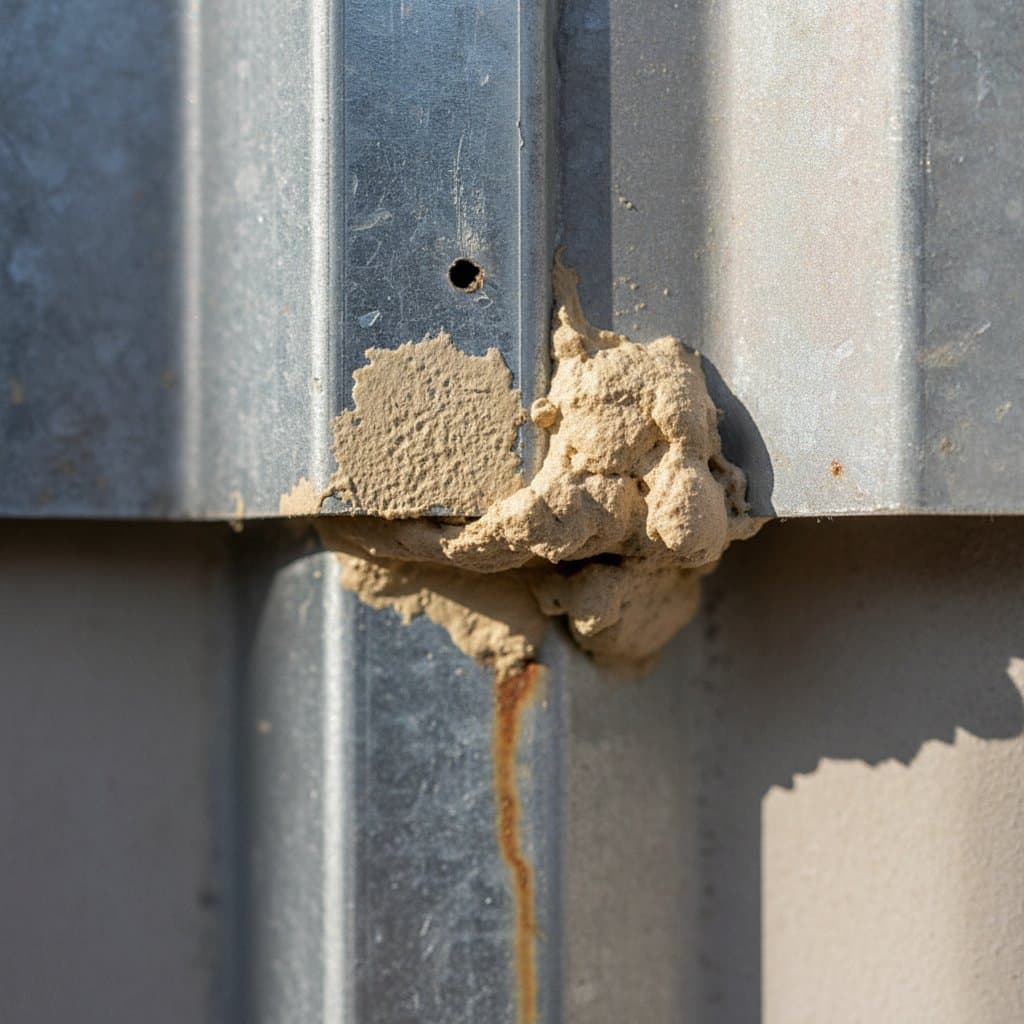
Moisture control in commercial space
What about the alternatives?

Commercial Insulation Options for Sterling Heights Buildings

Here is how spray foam compares to the other options owners of metal buildings and warehouses in Sterling Heights weigh most often.

Closed-cell spray foam on the metal shell

The right call for warehouse roofs, pole barn walls, and any metal surface where condensation is the main issue. Foam bonds to steel in one pass, stops air movement, and acts as a vapor retarder at the right thickness. Condensation stops and no separate vapor barrier is needed.

Recommended

Fiberglass batt insulation in a metal building

Batts fill the flat center of the wall panel. They do not stop air movement at the edges and do not act as a vapor retarder, so in a humid Macomb County summer warm air still reaches the cold metal and water forms on the surface. That trapped moisture speeds corrosion of the steel panels over time.

Skip

Rigid foam board panels

A solid choice when framing is open. Flat surfaces make cutting and fitting boards practical, and they install fast on a straight wall. Edges need tape or foam to close the seam. In a metal building with irregular framing or large roof spans, spray foam reaches the surfaces where boards leave gaps.

Acceptable

Radiant barriers only

Radiant barriers cut summer heat gain. That is their only function. They provide no meaningful R-value for a Macomb County winter and do not stop condensation on the metal surface. Metal buildings in this climate need both R-value and vapor control to stay dry and hold temperature through the season.

Skip
How it goes

From quote to walk-on, fast.

01

On-site assessment

02

Surface prep

03

Foam application

04

Trim, inspect & clean-up

Before you book

Common Questions Before a Commercial Spray Foam Job

Here are the questions we hear most from Sterling Heights building owners before scheduling commercial spray foam work.

Is spray foam the right choice for my pole barn or metal shop?
Yes. Condensation and heat loss are the two main complaints in a metal building that has no foam. In summer, warm humid air drifts into the shop. It hits the cold metal roof and walls and water forms on the surface. In winter, heat leaves fast through the metal shell. We apply closed-cell foam directly to the metal. It keeps the surface warm enough that moisture cannot form on it. It also seals the air gaps that bleed heat in the cold months. A shop that was too cold to work in during a Michigan January feels very different after we foam the roof deck and walls.
How long does a commercial spray foam job take?
Most jobs run one to three days. The exact time depends on square footage and how many surfaces we are covering. We map that out on the estimate visit. For occupied buildings, we can work in sections and keep part of the space running. We tell you the specific schedule before you sign off on anything.
Do I need to cover the foam after it is applied?
In most occupied buildings, yes. Michigan building codes require a protective layer over exposed spray foam in areas where people work. That layer is usually drywall or a rated coating. We go over what your building needs on every commercial estimate. Empty storage and warehouse areas have different rules. We cover all of that when we come out to look at the space.
Can we insulate a building that is already in use?
Yes. We section off the work area and ventilate the spray zone. We ask workers to stay clear through the cure window. On larger warehouses, we can work in phases over multiple days and keep the unsprayed sections running. We also time jobs outside peak hours when the building needs to stay active. The logistics differ from a home job but the work gets done with a clear plan in place.
Aftercare

How Commercial Spray Foam Holds Up Over Time

Closed-cell foam is a lasting fix once it cures. It does not settle, shift, or compress, and no retreatment is needed on a schedule. The thing to watch is damage from work done after the foam goes in. Roofers, plumbers, and HVAC crews can cut through a foamed surface. When that happens, air and moisture get back in at that spot. A targeted pass over the cut area closes it. On buildings where the roof foam is also the outer roofing layer, check any flashing or pipe penetration after a roofing crew comes through. Close any open gaps before the wet season starts.

  • Check foam at roof penetrations after any HVAC or plumbing work above the insulation line
  • Inspect foamed wall sections after any renovation that opened the metal panels
  • After roofing work, check the foam surface for cuts or gaps at flashings and penetrations
  • Closed-cell foam does not compress or settle and needs no retreatment on any schedule
  • Add a spot pass to any new wall opening created when the building expands or changes use
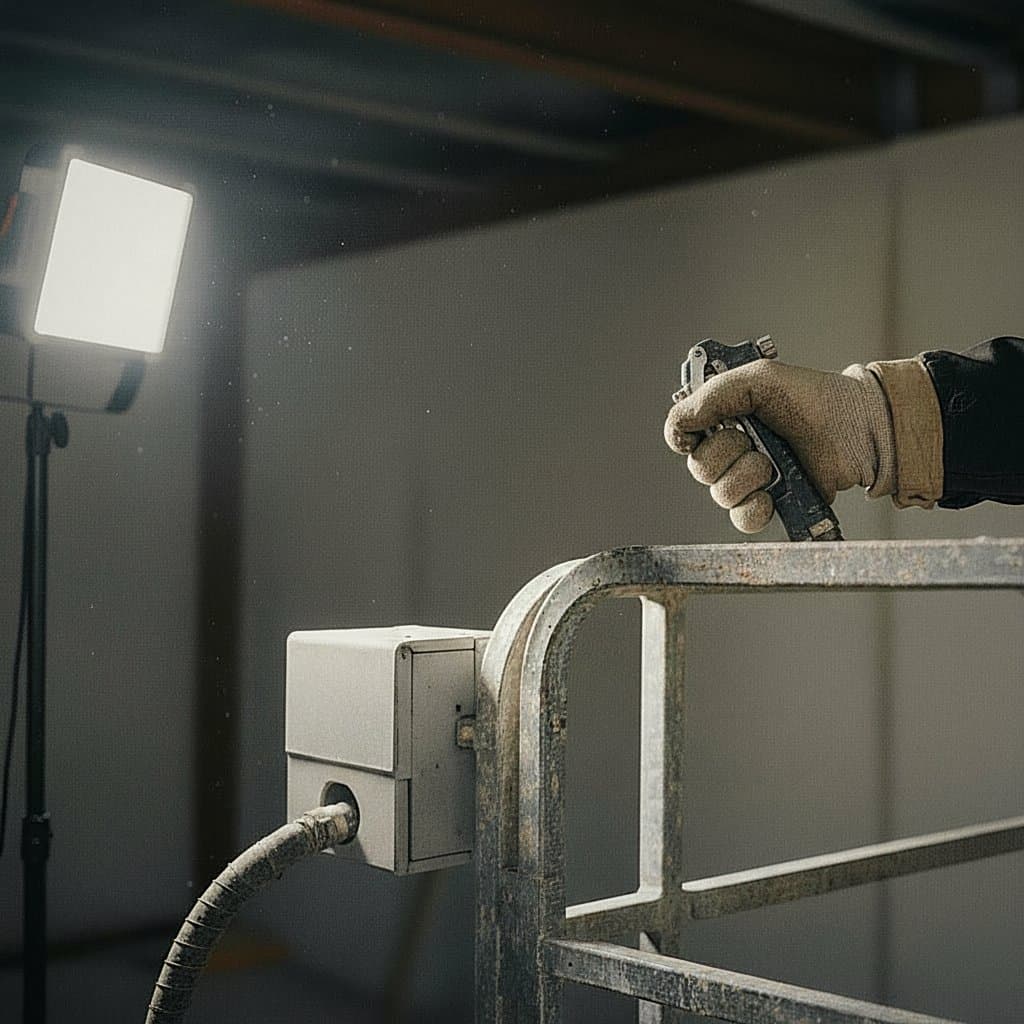
Crew equipment for large-scale application
FAQ

Commercial Spray Foam Questions Answered

How much does spray foam insulation cost in Sterling Heights?
No two jobs price the same. We walk the space first, then quote based on what we actually find: the area, which foam type fits, what the substrate needs before foam can go down, and whether any bypasses need sealing while we are in there. The only honest number comes from that walkthrough. Call us or fill out the form and we will come out, look at the space, and give you a straight quote.
What is the difference between open-cell and closed-cell spray foam?
Two different materials, two different jobs. Closed-cell foam is dense and rigid, running around 6.8 R-value per inch, and it works as both an air barrier and a vapor retarder, so we use it in crawl spaces, rim joists, and any surface where outside moisture is pressing against the building. Open-cell foam is softer. It delivers around 3.9 R-value per inch, expands to fill wall bays and attic slopes in one pass, and also reduces sound through the wall.
How long does spray foam insulation last?
Spray foam is a permanent install. Once it cures, it does not settle, shift, or compress the way batts and loose fill do over the years as Michigan winters and damp summers cycle through the building assembly. No retreatment schedule. If trade work later cuts through a sealed section, a targeted pass over the gap closes it.
Will spray foam insulation reduce my energy bills?
Yes, though the mechanism matters. Spray foam stops air from moving through the gaps in the building shell, and it is that air movement, not just a lack of insulation depth, that forces your furnace to run long cycles all winter just to hold the temperature you set. We seal the rim joist, crawl space, and attic. Those are the main paths heat uses to leave a Macomb County home in cold weather.
Do I need to leave my home during spray foam installation?
The spray zone stays closed while we work. For most rim joist and crawl space jobs, we ask you to stay out of that specific area through the cure window, which runs a few hours from when we finish spraying. Once the foam is fully cured it is stable and the vapor release is done. We tell you the exact window for your job before we start.
Ready when you are

Ready for a real Sterling Heights floor?

Send a few photos or book a free 15-minute on-site walk-through. A fixed written quote within one business day.

Get a free quoteCall (586) 275-5485
CallFree Quote