
Closed-Cell Spray Foam Insulation · Sterling Heights

Closed-Cell Spray Foam Insulation in Sterling Heights, MI

We spray closed-cell foam into the spots where Sterling Heights homes lose the most heat, so your shell holds tight all winter.

1 day installs · typical timeline
Free Quote

Free Closed-Cell Spray Foam Insulation quote.

We reply within 1 business hour. No spam, ever.

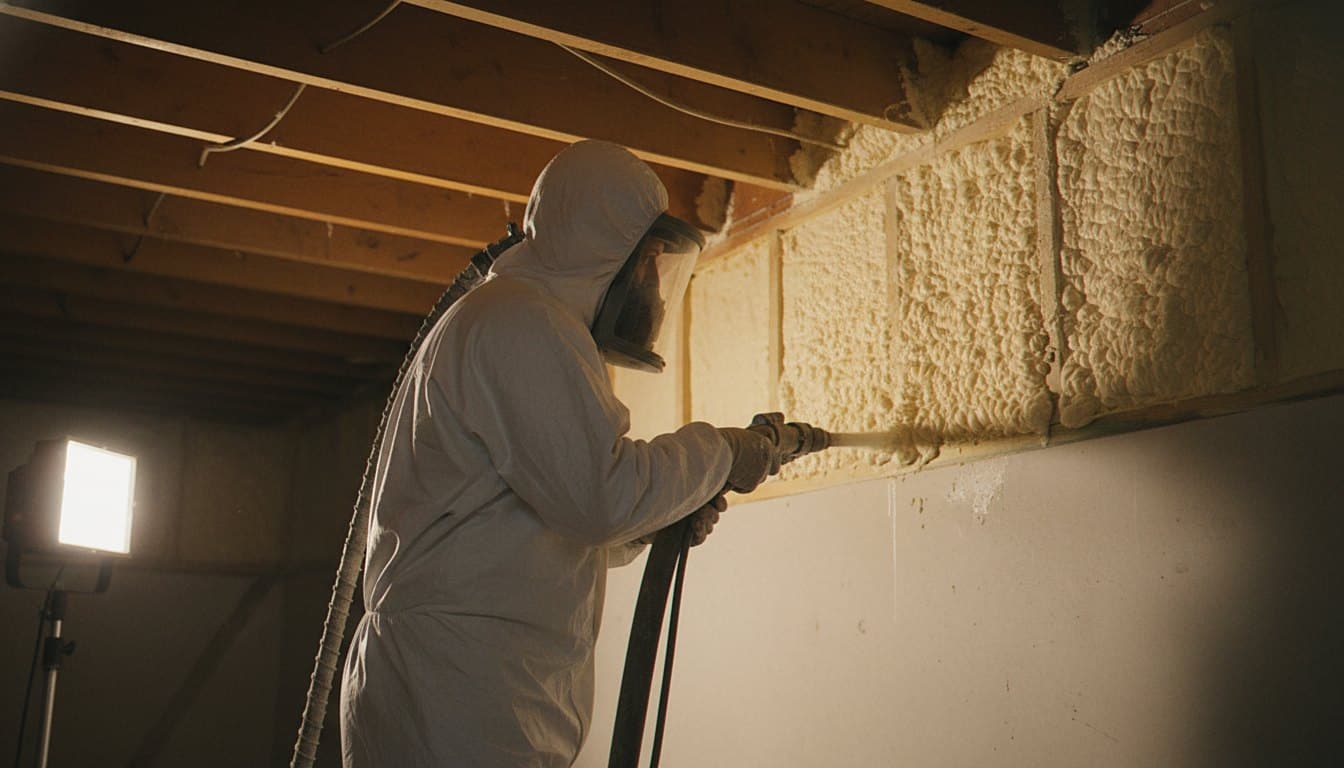
Dense closed-cell foam sprayed into wall cavity
Exposed wall studs before foam application
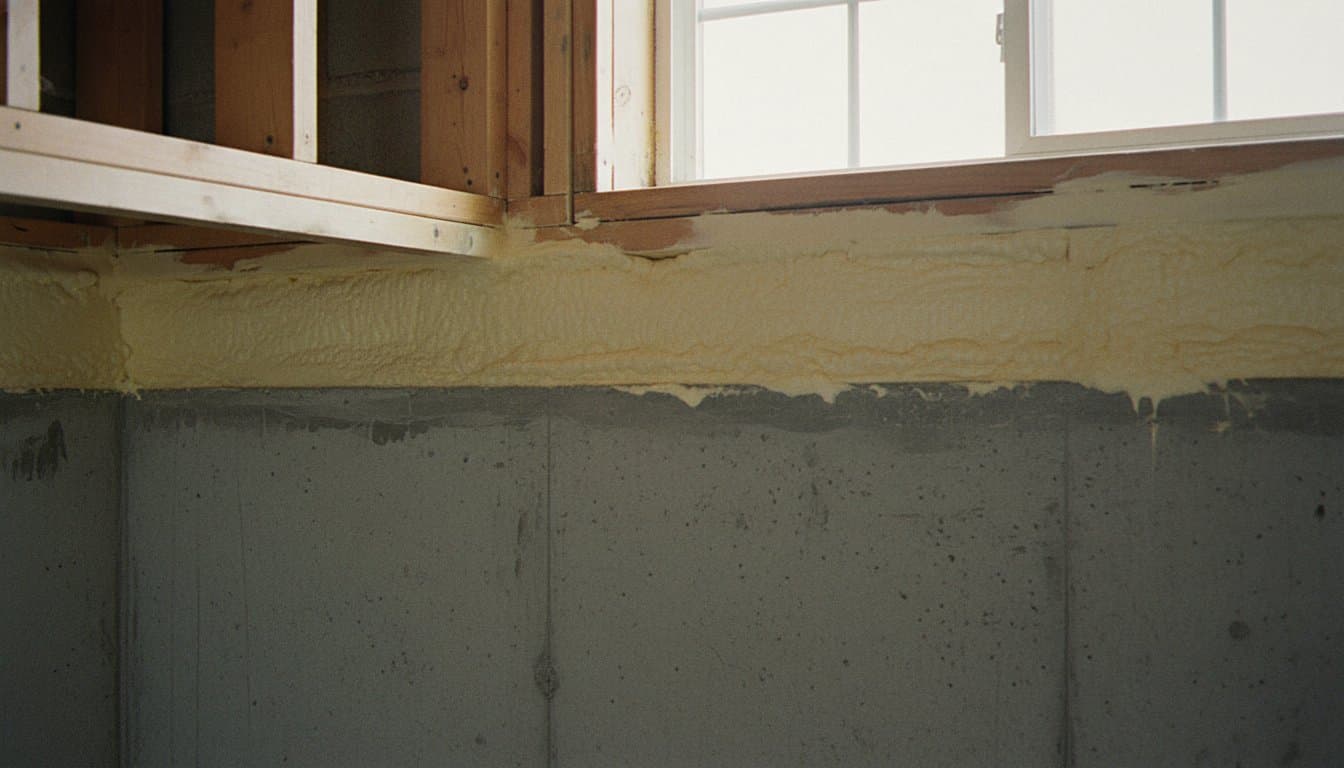
Finished foam sealed flush with studs
What we install

Dense Foam That Seals Heat and Blocks Moisture

Closed-cell spray foam insulation in Sterling Heights fixes two problems at once: air loss and moisture. The rim joist is where your floor framing sits on the foundation wall. Cold air moves right through that joint all winter. The first floor feels cold even when the furnace runs hard. We spray closed-cell foam onto that surface. It bonds to the wood and concrete, seals the air gap, and stops vapor in one pass. For the whole lower shell, our crawl space encapsulation service handles the floor and walls below at the same time.

Closed-cell foam is a two component polyurethane system that mixes at the spray gun, reacts, and expands into a dense, rigid cell structure. That density is what produces the high R-value, around 6.8 per inch. The rigid cell walls make the cured foam act as a vapor retarder as well as an air barrier, a combination no batt can match. We apply it in controlled lifts. Each pass must cure before the next one goes down. Spraying too thick in one pass traps heat inside the curing foam, breaks down the cell structure, and cuts the finished R-value. Lift control is how we make sure the foam delivers on every Sterling Heights job.

  • Dense cell structure delivers around 6.8 R-value per inch, higher than batt insulation.
  • Acts as a vapor retarder and an air barrier in a single application.
  • Bonds to wood, concrete, and metal so rim joist cold spots seal completely.
  • Rigid cured foam adds structural strength to wall cavities and roof assemblies.
  • Resists moisture, keeping crawl spaces and basement rim joists dry after installation.
Closed-cell foam seals the spots that batts never reach and works as both insulator and vapor retarder.

We work in Sterling Heights and Macomb County, and most of our closed-cell foam calls come down to two spots: the rim joist and the crawl space. Those are where Michigan winters and summer humidity hit the building shell hardest. We check substrate temperature before any foam goes down. Cold surfaces cause adhesion failure, and we will not spray outside the material's required range. We walk every finished job with you before we leave so you can see what was done. If something is not right, we fix it before we pack up.

If your floors are cold in winter or moisture is showing up in the crawl space or basement, closed-cell foam is likely the fix. We cover Sterling Heights and all of Macomb County. Call us or fill out the form and we will come out, walk the space, and give you a straight quote.
Materials

What Goes Into a Quality Closed-Cell Foam Job

Closed-cell foam comes from two liquid components. When they mix at the spray tip, they react and expand into a hard, dense structure with tiny closed cells. Those closed cells trap air. That trapped air is what holds the R-value, around 6.8 per inch, which is why this material delivers more insulating value per inch than any batt or loose fill system. The cured foam bonds to most building surfaces: concrete, wood framing, metal, and masonry.

Equipment condition matters as much as the material. Both components need to be at the right temperature and pressure when they meet at the gun. Even a small deviation off target changes the cell structure and the finished R-value. We check equipment temperature before the job starts. Substrate temperature is a separate check. Michigan job sites from October through April can get cold enough to cause adhesion failure and produce foam that looks finished but does not perform. We reschedule rather than spray outside the required range.

  • Around 6.8 R-value per inch in the cured state
  • Functions as a Class II vapor retarder at adequate thickness
  • Bonds to concrete, wood, metal, and masonry in a single pass
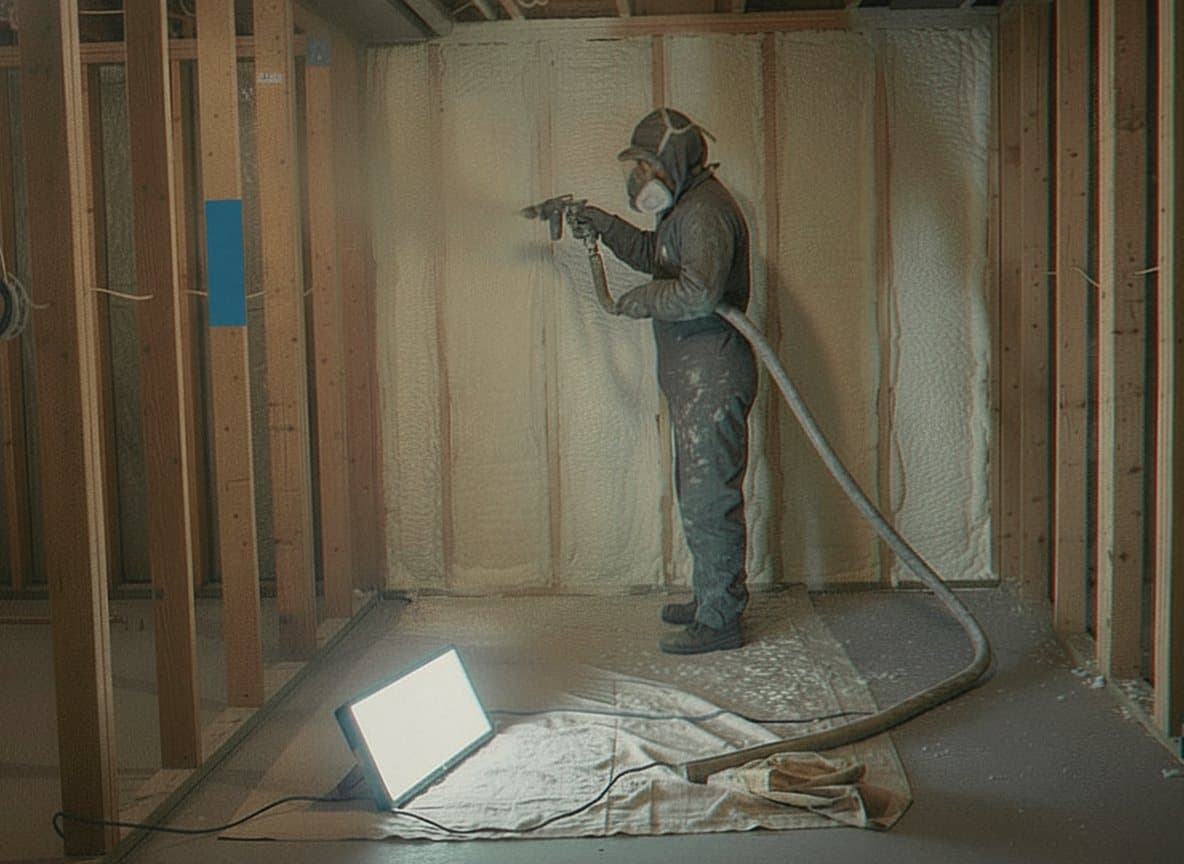
Crew spraying foam in even passes
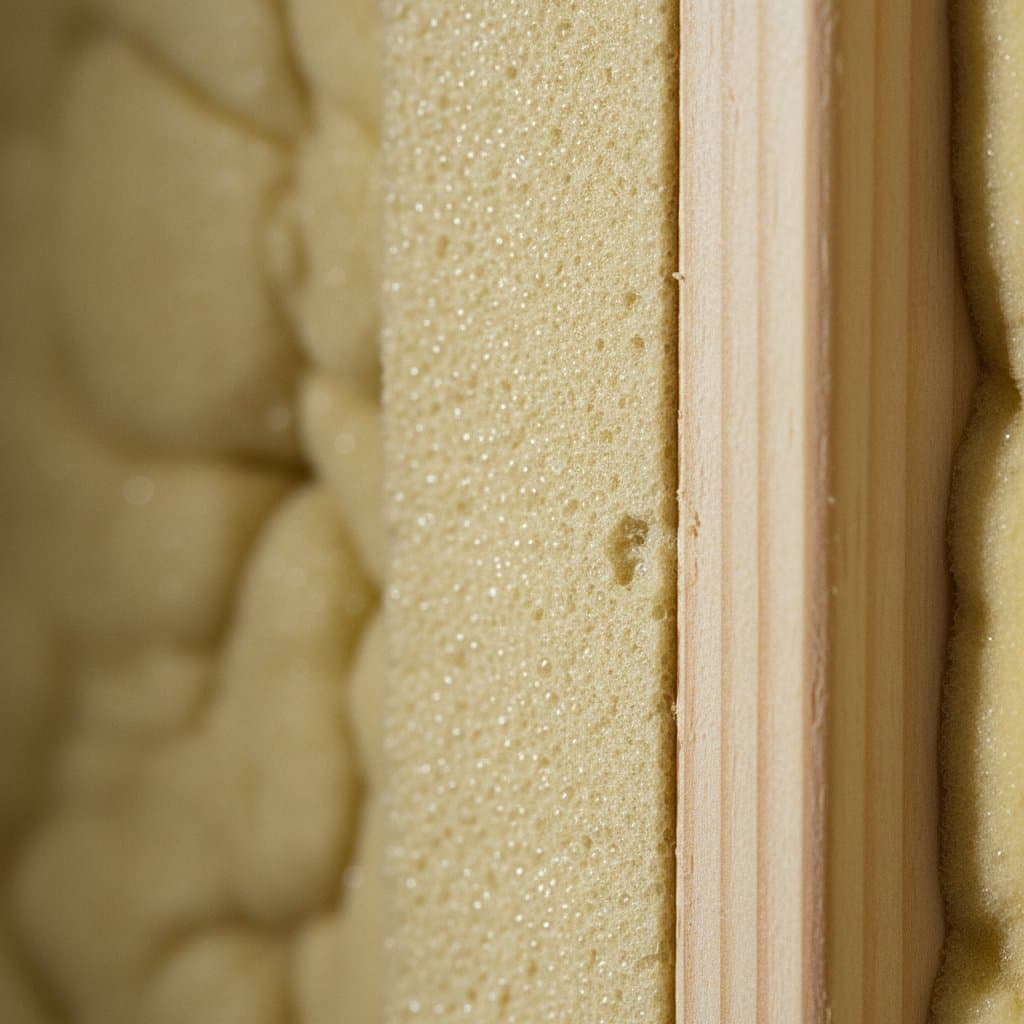
Close-up of dense foam structure
What about the alternatives?

Closed-Cell Foam vs Other Insulation Choices

Here is how closed-cell foam compares to the other options Sterling Heights homeowners weigh most often.

Closed-cell spray foam

High R-value per inch, air barrier, vapor retarder, and structural bond all in one application. The right call for rim joists, crawl spaces, and any space where moisture is a concern.

Recommended

Open-cell spray foam

Lower R-value per inch, around 3.9, but it expands well to fill wall bays and attic slopes. Good for air sealing in interior locations. It is not a vapor retarder, so skip it for crawl spaces and rim joists where moisture control matters.

Acceptable

Fiberglass batt insulation

Inexpensive and widely available, but it does not air seal. Batts in a rim joist cavity insulate the flat surface while air still moves around the edges. Cold floors and moisture problems tend to come back with batts alone.

Skip

Rigid foam board

A solid choice in flat, accessible applications. It can be cut to fit a rim joist cavity, but seams need to be taped or foamed to get a real air seal. Harder to use in irregular or tight spaces where spray foam conforms on its own.

Acceptable
How it goes

From quote to walk-on, fast.

01

On-site assessment

02

Surface prep

03

Foam application

04

Trim, inspect & clean-up

Before you book

Common Questions Before a Closed-Cell Foam Job

Here are the questions we hear most often from Sterling Heights homeowners before a closed-cell foam installation.

Is closed-cell foam too much for a residential rim joist?
No. The rim joist is one of the biggest heat loss and moisture entry points in a Macomb County home. Closed-cell foam handles both problems in one application. Open-cell foam or batts alone leave the vapor exposure unresolved and you get the same cold floors and condensation issues the next winter. The rim joist is one of the best places in the house to use closed-cell foam because the payoff per square foot is high.
Can I do this myself with canned foam from the hardware store?
Canned foam works well for small gaps around pipes and penetrations. A full rim joist or crawl space job needs different equipment. Professional spray foam gear controls component ratio, temperature, and lift thickness in ways a can cannot. Off ratio material or a cold surface produces foam that looks right but does not hold its R-value or bond well. The work is also hard to redo once a cavity is closed. Getting it right the first time matters here.
Do I need closed-cell foam if the rest of my insulation is batts?
You do not need to replace your whole house with spray foam. The rim joist and crawl space are where closed-cell foam does the most work. You can keep batts in the walls. Sealing the lower shell alone gives you a real improvement in comfort and moisture control. We will walk the space with you and tell you where the foam will help most.
Is it safe to be in the house after closed-cell foam is sprayed?
The two components that make up closed-cell foam release vapors during application and for a short window while the material finishes curing. We ask you to stay out of the sprayed area during that window. Once the foam is fully cured it is inert and stable and the vapor release is done. We will tell you the reoccupancy window for your job before we start so you know exactly when you can return to the space. For most rim joist and crawl space jobs, that window is a few hours.
Aftercare

How Closed-Cell Foam Holds Up Over Time

Closed-cell foam is a permanent installation once it cures. It does not settle, shift, or compress the way loose fill or batt insulation does over the years. No retreatment is needed on a schedule. What you want to check over time is whether the substrate it adhered to has moved or cracked, opening new gaps at the edges. Foundation settling can open new bypasses next to a sealed area. Plumbing or utility work can cut through a sealed section. When that happens, the new gap is easy to address with a targeted application.

  • Check rim joist foam after any foundation movement or new plumbing work
  • Look for new gaps at the edges of sprayed sections after major seasonal swings
  • Check crawl space foam and vapor barrier if water ever enters the space
  • Check attic foam whenever the roof above it is replaced
  • Keep foam surfaces clear of debris so you can spot any damage
Family comfortable in warm, sealed home
FAQ

Closed-Cell Spray Foam Questions Answered

How much does spray foam insulation cost in Sterling Heights?
No two jobs price the same. We walk the space first, then quote based on what we actually find: the area, which foam type fits, what the substrate needs before foam can go down, and whether any bypasses need sealing while we are in there. The only honest number comes from that walkthrough. Call us or fill out the form and we will come out, look at the space, and give you a straight quote.

What is the difference between open-cell and closed-cell spray foam?
Two different materials, two different jobs. Closed-cell foam is dense and rigid, running around 6.8 R-value per inch, and it works as both an air barrier and a vapor retarder, so we use it in crawl spaces, rim joists, and any surface where outside moisture is pressing against the building. Open-cell foam is softer. It delivers around 3.9 R-value per inch, expands to fill wall bays and attic slopes in one pass, and also reduces sound through the wall.
How long does spray foam insulation last?
Spray foam is a permanent install. Once it cures, it does not settle, shift, or compress the way batts and loose fill do over the years as Michigan winters and damp summers cycle through the building assembly. No retreatment schedule. If trade work later cuts through a sealed section, a targeted pass over the gap closes it.
Will spray foam insulation reduce my energy bills?
Yes, though the mechanism matters. Spray foam stops air from moving through the gaps in the building shell, and it is that air movement, not just a lack of insulation depth, that forces your furnace to run long cycles all winter just to hold the temperature you set. We seal the rim joist, crawl space, and attic. Those are the main paths heat uses to leave a Macomb County home in cold weather.
Do I need to leave my home during spray foam installation?
The spray zone stays closed while we work. For most rim joist and crawl space jobs, we ask you to stay out of that specific area through the cure window, which runs a few hours from when we finish spraying. Once the foam is fully cured it is stable and the vapor release is done. We tell you the exact window for your job before we start.
Ready when you are

Ready for a real Sterling Heights floor?

Send a few photos or book a free 15-minute on-site walk-through. A fixed written quote within one business day.

Get a free quoteCall (586) 275-5485
CallFree Quote